
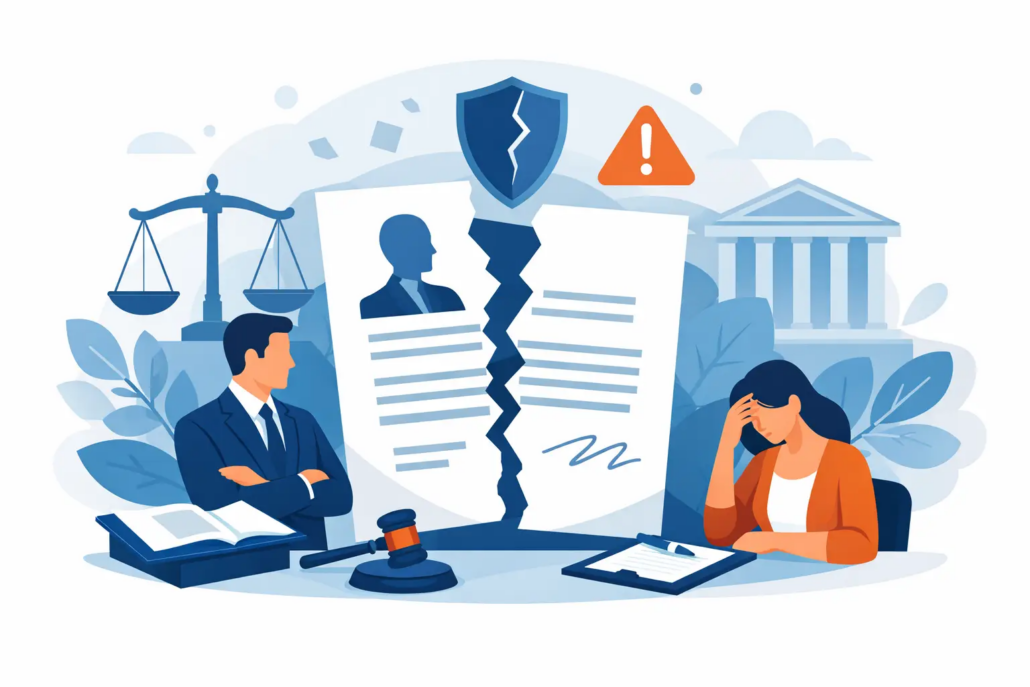
A missed payment can quickly become more than an accounting problem. A supplier stops delivering after you have committed to customers. A business partner ignores a buyout agreement. A former employee shares information protected by a confidentiality clause. When the other party does not do what the contract requires, a breach of contract lawyer can help you move from frustration to a clear, legally grounded response.
For business owners, contract disputes are rarely only about one document. They can affect cash flow, customer relationships, operations, and the future of the company. The right next step depends on the agreement, the evidence, the financial stakes, and whether preserving the business relationship still makes sense.
What Counts as a Breach of Contract?
A contract breach occurs when a party fails to perform a valid contractual obligation without a legally recognized excuse. The failure may be obvious, such as refusing to pay an invoice that is due. It can also be less direct, such as delivering goods that do not meet agreed specifications, missing a critical deadline, or violating a non-compete or confidentiality provision.
Not every disappointment in a business relationship creates a legal claim. A contract must generally be enforceable, the complaining party must have performed its own obligations or been ready to perform them, and the other party’s failure must have caused measurable harm. The wording of the agreement matters. So do the parties’ actions after the agreement was signed.
Some breaches are minor and may allow the parties to seek limited damages while continuing the agreement. Others are material breaches – failures serious enough to undermine the purpose of the deal. For example, a brief delay in delivering nonessential office supplies is different from a contractor abandoning a renovation project after receiving a substantial deposit.
Why the Contract Is Only the Starting Point
A written agreement is the foundation of a contract dispute, but it is not the entire case. A breach of contract lawyer will look closely at the complete record surrounding the deal. That can include signed amendments, invoices, emails, text messages, meeting notes, delivery records, payment history, and communications showing that one party knew about a problem.
This review often answers the questions that determine strategy. Did the contract require written notice before termination? Was there a cure period that gave the other party time to fix the problem? Does the agreement limit damages, require mediation or arbitration, or identify a specific court and governing law? A clause that seemed routine at signing can become central once a dispute begins.
For companies operating between the United States and Canada, these details require added attention. A cross-border contract may involve different currencies, tax considerations, shipping terms, choice-of-law provisions, and questions about where a claim can be brought. Assuming that a familiar local process applies can create avoidable delay and expense.
The First Steps Can Protect Your Position
When a breach occurs, the instinct may be to immediately stop work, withhold payment, or send an angry message. Those actions can sometimes be justified, but they can also create new risks. Before taking a major step, review the agreement and preserve the relevant evidence.
Keep the signed contract and all versions of it in one place. Save communications in their original form, gather invoices and proof of payment, and document the dates of missed deliveries, incomplete work, or other failures. If the breach is affecting customers or forcing you to hire a replacement vendor, retain records of those costs as well.
It is also wise to limit informal discussions that could be interpreted as changing the agreement or waiving your rights. A carefully prepared notice may be necessary to demand performance, identify the breach, or give the other party an opportunity to cure. The tone should be firm, factual, and consistent with the contract terms.
Remedies Depend on the Loss and the Agreement
The goal of a contract claim is usually to put the injured party in the position they would have been in if the agreement had been performed. Monetary damages are common, but they are not automatic and they are not always the best solution.
Direct damages may include unpaid amounts, the cost of completing unfinished work, or the difference between the contract price and the cost of finding a replacement supplier. In some cases, a business may seek consequential damages for foreseeable losses caused by the breach, such as lost profits. These claims require strong proof and may be limited or excluded by the contract.
There are situations where money alone is not enough. If a dispute involves unique property, confidential business information, or conduct that could cause continuing harm, a party may seek court orders that require or prevent certain actions. A contract may also include liquidated damages, which set an agreed amount payable after a particular breach. Whether that provision is enforceable depends on the language and the circumstances.
A practical legal strategy also considers collectability. Winning a judgment against a company with no available assets may not achieve the result you need. A lawyer can help assess the strength of the claim alongside the other party’s ability to pay, the cost of litigation, and opportunities for a business-focused resolution.
Negotiation, Litigation, and Arbitration
A contract dispute does not always need to become a courtroom battle. Many matters are resolved through direct negotiation after each side understands the facts, legal exposure, and likely costs of continuing the dispute. A demand letter supported by a well-organized record can create the leverage needed for a productive settlement discussion.
Mediation can be useful when both sides want to preserve a commercial relationship or need a confidential setting to work through a dispute. It gives the parties more control over the outcome than a trial, although it requires a willingness to negotiate in good faith.
Some contracts require arbitration rather than court litigation. Arbitration can be faster and more private in certain cases, but it may involve filing fees, restricted discovery, and limited rights to appeal. The best forum is not always the fastest one. It depends on the contract, the amount in dispute, the evidence needed, and the remedy you are seeking.
When negotiation does not resolve the matter, litigation may be necessary to enforce contractual rights, defend against an unfounded claim, or seek urgent relief. Early case assessment is valuable because it helps determine what evidence to secure, which deadlines apply, and whether settlement efforts should continue alongside formal action.
When to Contact a Breach of Contract Lawyer
It is generally better to seek legal guidance before a disagreement hardens into a dispute. Prompt advice is especially helpful when the contract involves a large payment, essential business operations, ownership interests, intellectual property, confidential information, or a cross-border transaction.
You should also consider speaking with counsel if you receive a demand letter, notice of default, lawsuit, arbitration filing, or threat of legal action. Ignoring those documents can narrow your options. Even when you believe the other side is clearly wrong, deadlines and procedural requirements still matter.
The Bobb Law Firm PLLC helps business owners and individuals evaluate contract disputes with a practical focus on the outcome. That may mean enforcing an agreement, defending a claim, pursuing a negotiated resolution, or identifying a better way to protect the business going forward.
A contract dispute can consume time and attention that should be going toward your work, customers, and family. Getting clear advice early can help you respond with purpose, preserve what matters, and make decisions based on your actual legal and business options.